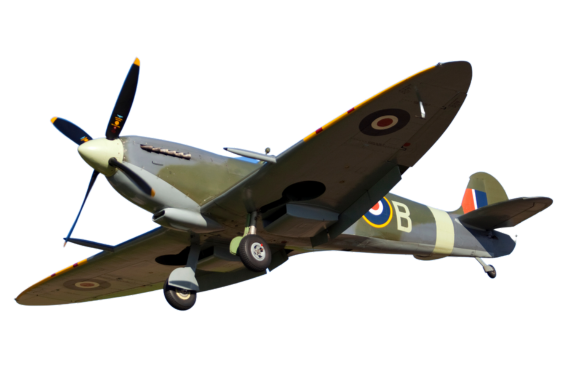
Ideas in Flight: Networks of Franco-British Resistance and the Chant des Partisans
By the light of the moon, clandestine pilots broke through the boundaries of wartime France to land agents and operators on makeshift landing sites in farmers’ fields. They carried with them weapons, knowledge, and often documents that would change the course of the Second World War and reshape Europe thereafter. These flights, and the materials transported on them, lay at the heart of a complex and fragile world of wartime resistance: improvised, dangerous, and deeply dependent on the movement of ideas, people and matériel.
Using the transfer of the music and lyrics for the Chants des Partisans (transferred by Hudson in 1943), this talk will explore one such transfer to give a sense of how Franco-British cooperation enabled wartime resistance. In these moments of transfer, we can track different levels of resistance activity -from the intellectual, cultural, and political émigrés who created these documents, to the military and intelligence organisations that transported them into Occupied France, and finally to the networks of resisters who interpreted, adapted, and mobilized their content.
About the Speaker
Dr Andrew WM Smith
Deputy Dean of Education, Faculty of Humanities & Social Sciences, Queen Mary University, London
Andrew Smith is a historian of modern France interested particularly in ideologies and strategies of resistance, and how identities are shaped by interaction with the state. This has led him to look at wartime resistance, protest movements, and decolonization spanning the Second World War and Cold War.
Andrew’s research interrogates the way that ordinary people engage in politics, culture and society, with a particular focus on where that engagement crosses borders, re-thinks the nation, and imagines the future. He is committed to research-led teaching and the challenge of introducing Anglophone students to global Francophone culture and history with documents, concepts and ideas drawn directly from his archival research.
He is a longstanding member of the Executive Committee of the Society for the Study of French History and has worked as an Officer of the Royal Historical Society first as Honorary Director of Communications and also as Honorary Secretary. He is a Fellow of the Higher Education Academy and Fellow of the Royal Historical Society. He previously taught at University College London, the University of Chichester, and Brunel University, London. Andrew is also a director of the Save Tangmere Tower campaign to restore the former RAF Tangmere control tower.
Event Details
Saturday 2nd May 2026: 2:00pm
This event is free to attend with a standard museum entry ticket but you must reserve your seats as capacity is limited.